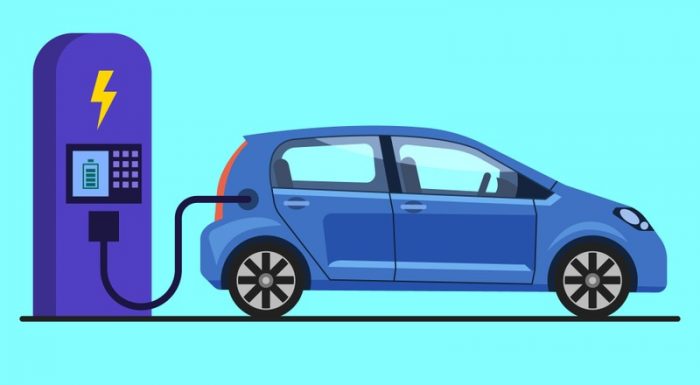

Climate strategies accentuate the importance of switching to electric mobility. The cars we will sell from 2025 onward in the EU will have to reach a level of emissions of 68-78 grams CO2 / km (almost 40% less than the emissions of new cars in many of the European Countries). This is only achievable if we start taking in consideration a good share of electric vehicles.
In urban areas it is reasonable to imagine, in Europe and beyond, a contraction of the total number of cars in circulation, more and more shared and without driver, and a rapid decline of internal combustion ones. “General Motors believes in an all-electric future,” said Mark Reuss, president of GM North America, last month. We are talking about a two-thousand-billion-dollar market a year in which electric cars now account for only 1%, but that is bound to drastic changes.
With which occupational consequences? Once again, it depends on the choices that will be made by individual producers in the organization of work and the policies of the various countries in the labor market. The automation of production processes has already led to a sharp reduction in the work required and the transition to electric cars will lead to an acceleration of this process. In fact, we are talking about a much smaller number of components to be assembled (200 versus 1400) and a simplification of the machining processes.
It is therefore necessary to reflect on the possibility of seizing new opportunities by providing increasingly complex mobility services that limit the use of individual-owned vehicles. The productive center of gravity will probably move to Asia. China, unable to compete on conventional vehicles, seems to want to overtake by focusing on the electric (in the second quarter of 2017 it recorded 44% of the world sales of these vehicles and aims to host in 2022)
One of the decisive factors in this race concerns, as is known, the production of storage systems that currently account for 30-50% of the cost of electric vehicles. It is no coincidence that in 2022 China is aiming for 65% of the world production capacity of lithium batteries. For now, the rapidity of the reduction in accumulation prices cuts off the hydrogen fuel cells powered by the Japanese, and will also put in difficulty the alternative fuels such as LPG and methane.
It is worth to note the recent signing with the Chinese Government of an agreement by Tech Entrepreneur and CEO of Tesla Electric Cars Elon Musk in which he committed in build his next and perhaps largest factory in Chinese Soil.
This change from combustion to Electric motor is equivalent to a new industrial revolution in which all the major players will fight to achieve the supremacy on the market and be the world leader. Despite this new “electric fever”, there is still a good portion of countries that have demonstrate less pressure or seem not to be interested to join the race yet, unfortunately for them, those will be the “followers”, the one who will have to pay the high profit margin prices dictated by the “leaders” in this technology, leaders such as the Elon Musk of today.

Digital Designer, blog writer and also a tech enthusiast.
He loves to write content for blogs, podcasts, design websites, logos, brochures, banners and anything that sends a message to an audience.
You can contact Daniele at the link below: